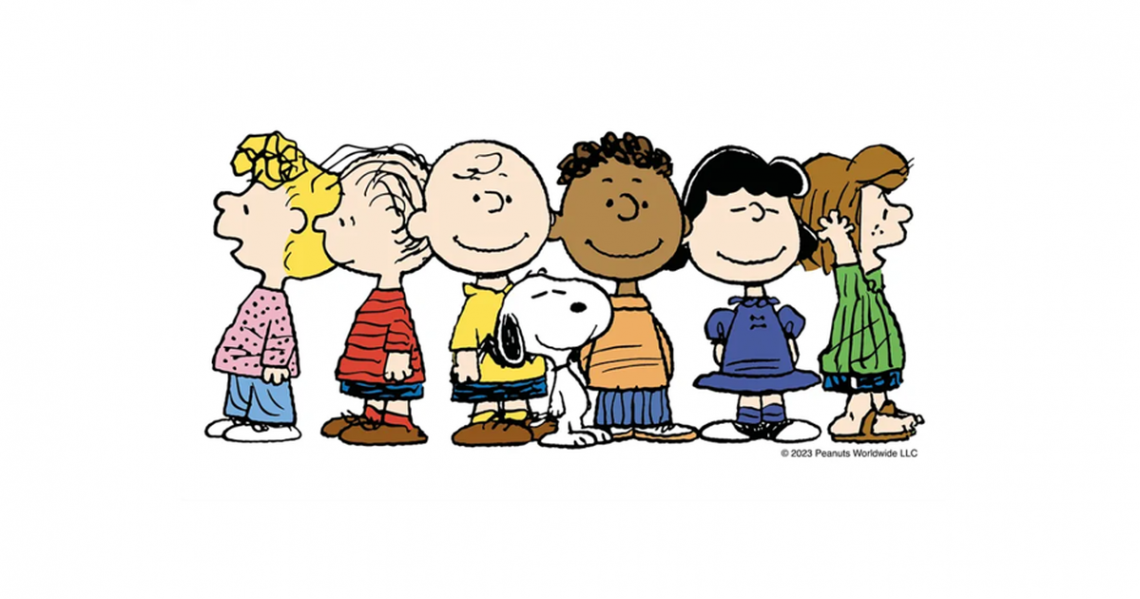
For as long as I can remember, my mom identified me with Lucy from Peanuts.
Why?
Well, I never had a crush on a musician—except maybe Donny Osmond—and I loved dogs, so it must have been the fact that I was labeled “bossy” by nearly everyone I knew.
I just didn’t mind taking the lead, making a plan, and executing it.
I guess I never let the label bother me much. Then I started receiving Lucy cards, Lucy merchandise, Lucy Christmas ornaments—and it kind of became a thing. Now even my daughter knows: if she sees something featuring Lucy, chances are it’s coming home to me.
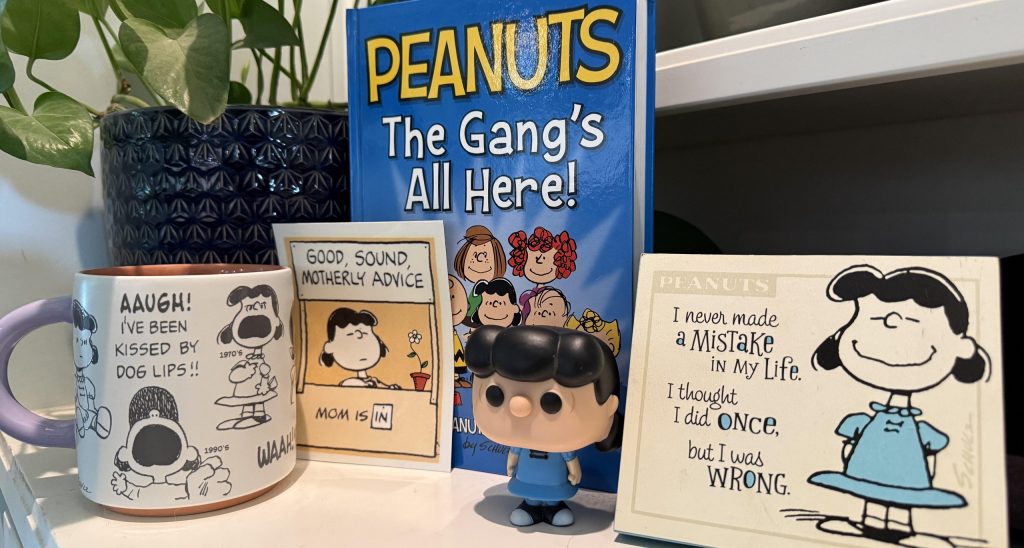
So, apparently, I’m Lucy.
To be fair, I did eventually earn a doctorate, and I’m currently working on a certificate in biblical counseling. So I suppose Mom really was onto something.
The Doctor is IN.
Although after all these years, five cents may be subject to inflation.
But which Peanuts character are you?
Which Character Sounds Like You?
Before you answer, see if you recognize yourself in one of these:
A. Things don’t always go your way. In fact, sometimes it seems as though they rarely go your way. But you keep showing up, keep hoping, and keep trying one more time.
B. You have a rich imagination and a mind that can take you almost anywhere. Reality is fine, but sometimes the world inside your head is considerably more interesting.
C. You know what you think. You don’t mind taking charge, and if someone needs advice, direction, or perhaps a complete plan for reorganizing his life, you’re happy to provide one.
D. You’re a thinker. You want to know what things mean, why they matter, and how they fit together. You may be capable of offering profound wisdom while still hanging tightly to a few securities of your own.
E. You ask questions. Lots of them. And when the conventional answer doesn’t make much sense to you, you’re perfectly willing to come up with an explanation that does.
F. You’re more likely to jump in and do something than sit around discussing it. You’re loyal, direct, and willing to stand up for someone who is being treated unfairly.
Have you picked one? Maybe two? Hold that thought.
If you chose A, you’re Charlie Brown—the sensitive, persistent soul who keeps trying even after the football has been pulled away for the hundredth time.
B is Snoopy—the independent, imaginative dreamer who can turn an ordinary afternoon into an adventure.
C, of course, is Lucy.
D is Linus—the thoughtful philosopher who can ponder life’s deepest questions while clutching his security blanket.
E is Sally—practical, inquisitive, and occasionally operating according to a logic all her own.
And F is Peppermint Patty—forthright, loyal, action-oriented, and ready to step in when something isn’t right.
Apparently, I’m Lucy
For most of my life, I thought I knew exactly why I was Lucy.
Bossy.
That was the word.
But when I went looking at the official Peanuts description of Lucy van Pelt, I discovered there was a little more to her than that.
Lucy is strong. Confident. Opinionated. Ambitious. She looks out for her brothers. She’s willing to say what she thinks and isn’t particularly afraid to take charge.
Granted, she can also be sarcastic and downright mean. And then there’s that whole football situation. I’m not defending that.
But suddenly the character that had been assigned to me looked a little more complicated than the label I had attached to her.
And maybe I did, too.
That’s the problem with labels. They’re wonderfully efficient.
Bossy.
Shy.
Smart.
Difficult.
Funny.
Sensitive.
Athletic.
Quiet.
Stubborn.
The responsible one.
The troublemaker.
The peacemaker.
We hear them often enough—especially when we’re young—and eventually we can start introducing ourselves that way without even realizing it.
But a label can describe something about us without describing all of us.
Maybe the little girl everyone called bossy really did need to learn when to stop talking and let somebody else lead. But maybe she was also learning that she could gather people, make a plan, and get something done.
Maybe Charlie Brown isn’t simply the kid who loses. Maybe he’s the kid who keeps trying.
Maybe Linus isn’t simply insecure because he carries a blanket. Maybe he’s also thoughtful, wise, and hopeful.
Maybe Peppermint Patty isn’t simply loud or impulsive. Maybe she’s fiercely loyal.
And maybe Lucy isn’t just bossy.
More Than a Label
The older I get, the more careful I want to be about confusing a description with an identity.
Because ultimately, my identity isn’t determined by a personality trait, a childhood nickname, a role I’ve played, somebody else’s assessment of me—or even a cartoon character I’ve been collecting for most of my life.
Those things may tell you something about me. They just don’t get to tell you who I am.
God does that.
Scripture uses very different words for those who belong to Christ: chosen, loved, forgiven, redeemed, adopted, God’s workmanship.
Those aren’t personality types.
They’re identity.
But that doesn’t mean our personalities don’t matter. God didn’t make us identical. He made us individuals—with different strengths, different weaknesses, different ways of seeing the world, and different things to contribute. We need the person who takes charge and the person who stops to think. We need the dreamer and the pragmatist. We need the one who keeps trying and the one who notices when someone else needs defending.
Maybe part of learning to live well with one another is recognizing that the trait that occasionally drives me crazy in you may be the very strength God uses to accomplish something I couldn’t.
And, of course, our strengths can have a downside, too. Confidence can become arrogance. Leadership can become control. Thoughtfulness can become paralysis. Persistence can become stubbornness.
Perhaps maturity isn’t becoming less like ourselves. It’s learning to submit all of who we are—strengths, weaknesses, personality, preferences—to the One who made us in the first place.
So I’ll keep my Lucy ornaments. I’ll smile when my daughter finds another piece of Lucy merchandise that apparently needs to live at my house. And I’m perfectly willing to admit that my mother may have been onto something all those years ago.
I still like taking the lead.
I still like making a plan.
And I definitely still have opinions.
But I’m more than Lucy.
And you are more than your Peanuts character.
It’s fun to recognize ourselves in well-loved characters—to laugh at the similarities, claim the strengths, and perhaps reluctantly admit to a weakness or two.
But maybe there’s something even better we can do.
Maybe we can learn to look for those same strengths in the people around us.
The person we call stubborn may be remarkably persistent. The one we think is too quiet may be listening carefully. The friend who always has an opinion may be willing to say what everyone else is afraid to say. And that person who drives us crazy by asking why may be the one who notices something the rest of us missed.
Loving people well means seeing more than the trait that frustrates us. It means taking the time to see the whole person God created—the strengths as well as the weaknesses, the gifts as well as the rough edges—and recognizing that God may use something in that person that He didn’t put in us.
Maybe that’s part of why we need each other.
So go ahead. Find your Peanuts character.
I’m keeping Lucy.
But the next time you recognize a little Charlie Brown, Linus, Sally, Snoopy, Peppermint Patty—or even Lucy—in someone you love, look a little closer.
You might just discover there’s more to the character than you thought.