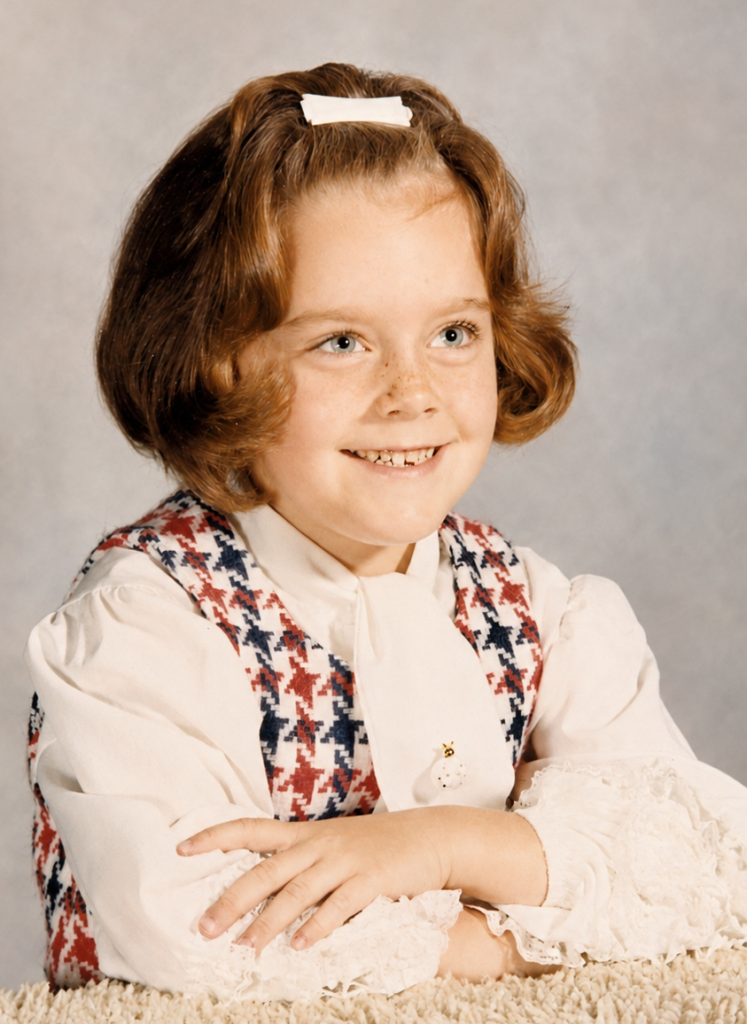
I have been able to read since birth.
Okay, fine. Maybe not birth. But really close to it.
No one ever needed to teach me to read. I don’t remember sounding out my first word or suddenly realizing that letters made sounds and sounds made words. I don’t remember learning to read at all.
Reading to me was like breathing.
Harper Lee captured that feeling perfectly through Scout in To Kill a Mockingbird:
“Until I feared I would lose it, I never loved to read. One does not love breathing.”
Exactly.
I don’t remember ever learning how to do it, and I can’t imagine not doing it. That sounds wonderful—and it was. But it also presented my teachers with a bit of a problem.
What Do You Do With the Kid Who Already Knows?
I’ll never forget my first-grade teacher, Mrs. Patterson.
She was older than dirt. At least I thought so. Remember, I was six.
She had been teaching for eons and probably should have retired already. But we loved her.
I remember one day when she somehow managed to staple her finger instead of the paper. The staple was actually stuck in her finger, and she was bleeding. I do not handle blood—or other people’s pain—particularly well, so I was quite thankful when she sent me to the nurse’s office to get some assistance.
Mrs. Patterson depended on me, and I liked that. She gave me responsibility, and I thrived on it.
She also had another problem to solve.
I didn’t need a reading group. When I walked into first grade, I could already read everything in the curriculum—and probably the teacher’s guide.
So Mrs. Patterson did something that, looking back all these years later as an educator myself, I find rather remarkable.
She put me to work.
My First Teaching Job
When Mrs. Patterson got behind on reading groups, she would take one group, and I would take another.
There I was, a six-year-old first grader, helping other first graders learn to read. And I loved it.
I loved encouraging them. I loved helping them figure out words. And strangely enough, I don’t remember my classmates having any problem with the arrangement either.
Mrs. Patterson had found something useful for me to do with something I already knew. But she didn’t stop there.
Once a week or so, I would head down to the kindergarten classrooms. The teachers would gather all of the kindergarteners together, I would sit in one of those little classroom chairs with all of the children around me, and I would read books to them.
The kindergarten teachers could sit off to the side, have a conversation, prepare something for class, or maybe just breathe for a few minutes.
And I got an audience.
I loved reading to those kids. I also made a rather important discovery.
The kindergarteners couldn’t read the book.
That meant I could stick to the text—or embellish the story as I saw fit. They would never know.
I may have discovered dramatic interpretation at six years old, too.
Maybe Mrs. Patterson Knew Exactly What She Was Doing
For years, I remembered those experiences simply as funny stories from first grade. Now, after spending most of my life as an educator, I see them differently.
Mrs. Patterson had a six-year-old sitting in her classroom who had already mastered much of what she was supposed to teach me.
She could have given me more worksheets. She could have told me to sit quietly and read while everyone else learned. She could have made me work farther ahead in the textbook.
And I probably would have done all of those things. But eventually, I would have been bored.
Instead, she gave me something much more valuable.
She gave me someone to teach.
There’s a familiar old learning maxim that says:
I hear and I forget.
I see and I remember.
I do and I understand.
But I think we could add another line:
I teach, and I grow.
When you have to explain something to someone else, you have to think about what you know differently. You have to organize it. Find the right words. Notice what the other person doesn’t understand. Try another explanation. Answer questions.
Teaching someone else forces you to use what you know. And for a child who is already ahead, that can be far more valuable than simply giving her more. Sharing knowledge and skill for the purpose of helping someone else develops more than academic ability. Serving someone else shifts the focus from what I already know to what I can give—and in the process, develops kindness, patience, and empathy.
Advanced Doesn’t Have to Mean Bored
Every classroom contains students at different levels of knowledge and skill. That’s not new.
And one of the complaints we frequently hear from advanced students—and from their parents—is:
“She’s bored.”
Sometimes she probably is. But maybe the answer isn’t always finding harder worksheets or piling on additional assignments.
Maybe we should occasionally ask a different question:
What can this student do with what she already knows?
Can she explain a concept to another student? Can she lead a review? Can she read to younger children? Can she demonstrate a skill? Can she create an example? Can she help someone troubleshoot a problem?
Can she use what she knows in a way that develops communication, patience, leadership, empathy, and confidence?
Obviously, we shouldn’t turn an advanced student into an unpaid classroom aide or make her responsible for another child’s education. She deserves to continue learning and being challenged herself.
But there is a big difference between putting a child’s ability to use and using the child.
Mrs. Patterson somehow understood that difference. I never felt burdened by the responsibility she gave me.
I felt trusted. I felt capable. I felt useful.
And perhaps most importantly, I wasn’t sitting in the back of the room waiting for everyone else to catch up.
Look for What They Can Give
Teachers spend so much time asking what each student still needs to learn. That’s our job.
But maybe we should also ask:
What does this student already know well enough to give away?
There may be a child sitting in your classroom who already understands today’s lesson.
Wonderful.
Don’t just ask how you can keep her busy. Ask what she can do with what she knows.
Give her somewhere to grow. Give her someone to encourage. Give her a reason to communicate what she understands.
Maybe even give her a tiny chair and a room full of kindergarteners.
Just remember to check occasionally and make sure she’s actually reading what’s on the page.


Love this story! She inspired you to teach! Awesome!