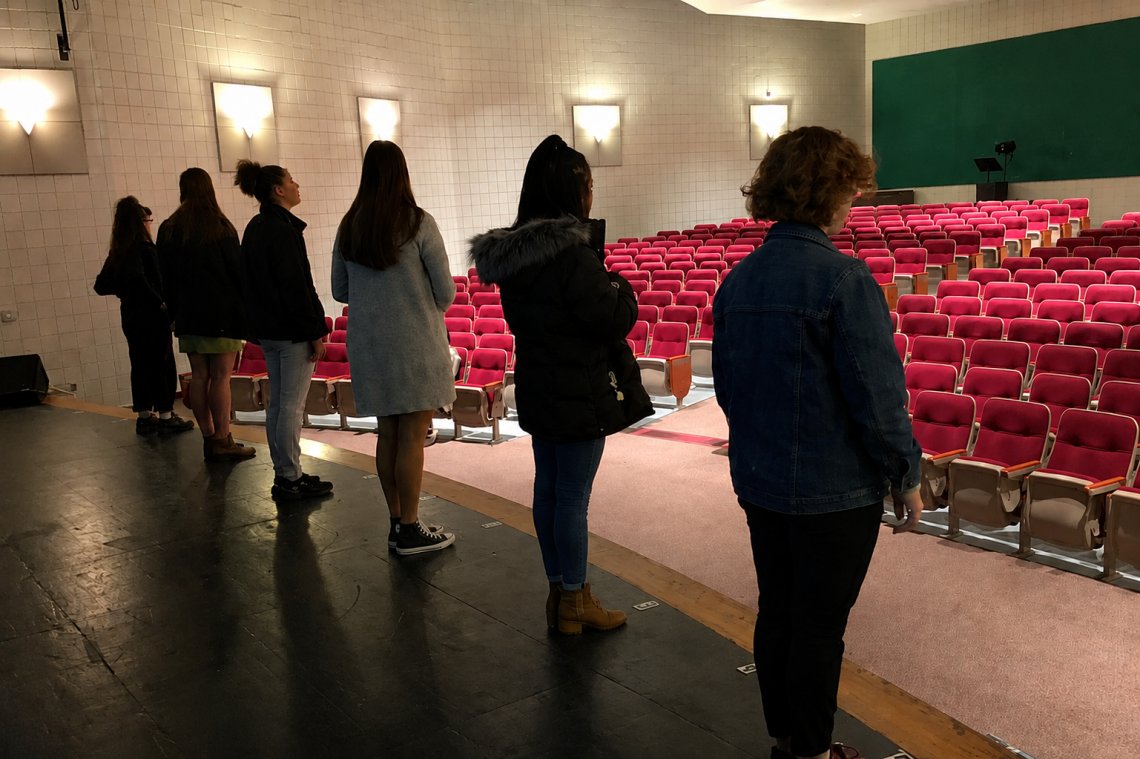
At the Regional One-Act Play Festival in 2019, I directed my students in Deborah Brevoort’s 1998 play, The Women of Lockerbie.
Sometime before our performance, another director pulled me aside.
“Hey, you guys are doing Women of Lockerbie, right?”
“We are.”
“The dad of one of my students lost his sister on that flight.”
I stared at him.
“What? No way. May I meet him?”
The Story of Lockerbie
On December 21, 1988, four days before Christmas, Pan Am Flight 103 was traveling from London to New York when a bomb exploded aboard the plane over Lockerbie, Scotland. The aircraft broke apart, scattering wreckage across the countryside and into the town below. All 259 passengers and crew were killed, along with 11 Lockerbie residents—a total of 270 lives lost. Among the passengers were 35 Syracuse University students returning home after a semester abroad.
In the aftermath, the people of Lockerbie found themselves caring not only for a devastated town but also for the belongings of those who had died. Personal effects recovered from the wreckage were carefully cleaned and returned to victims’ families.
That extraordinary act of compassion became part of Lockerbie’s legacy—and provides the emotional foundation for The Women of Lockerbie, a play less concerned with the bombing itself than with grief, remembrance, and what ordinary people choose to do in the face of unimaginable loss.
I remembered the bombing. There was something particularly horrifying about the randomness of it. A plane filled with innocent people simply fell out of the sky onto an unsuspecting town below.
Years later, while teaching AP Language, I read quite a bit of literary nonfiction. One title caught my attention: The Boy Who Fell Out of the Sky by Ken Dornstein.
Dornstein’s older brother, David, was 25 years old and dreamed of becoming a writer. He had been living in Europe and boarded Pan Am Flight 103 to come home. He didn’t make it.
I didn’t know it then, but Lockerbie would find its way into my life again.
Finding the Right Play
When I taught theatre, one of my responsibilities was preparing a one-act play for our Regional One-Act Play Festival. The winning production advanced to the state competition.
I learned quickly that choosing the right play for the students you actually have is one of the most important decisions a director makes.
My daughter Kayla had been a theatre major in college and had been exposed to all kinds of one-acts through classes and senior projects. So when I needed another title, I asked her.
It was my final year teaching theatre, and I had developed a core group of actors who were ready for something they could really sink their teeth into. Most of them were girls.
Kayla suggested The Women of Lockerbie.
The play takes place seven years after the bombing. An American mother has come to Lockerbie searching for some trace of the son she lost aboard Flight 103. There she encounters the women of Lockerbie, who are fighting to obtain the victims’ clothing so they can wash it and return it to their families—turning, as the play describes it, an act of hatred into an act of love.
It was exactly the kind of material my students were ready to tackle.
I cast the show.
The students playing the Americans were ready to dive in. The girls playing the Scottish women presented another challenge: the accents. A theatre-professional friend graciously volunteered to work with them after school, and my girls essentially learned their lines phonetically. They worked hard, and they got it.
Then there was Bill, the grieving father.
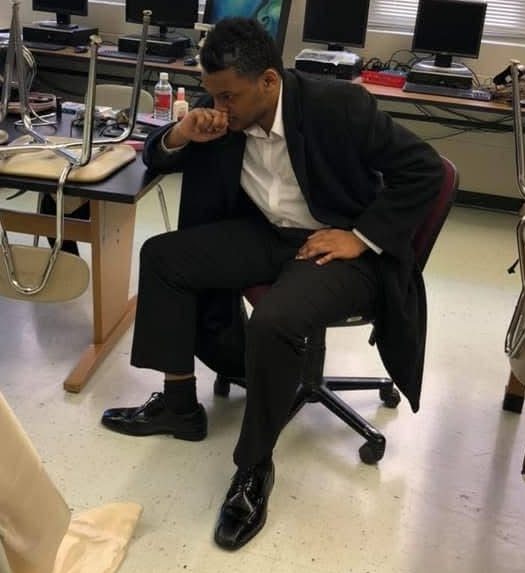
I didn’t have many strong male actors to choose from. I cast Nigel, who had little experience but very much wanted to be an actor.
I had to push him.
When he skipped a rehearsal, I had a serious conversation with him. If he missed another one, I told him, I would replace him.
He didn’t miss another one.
270 Names
Something began happening during rehearsals that I hadn’t anticipated.
My cast—and even students who weren’t in the production—became increasingly interested in what had actually happened to Pan Am Flight 103 and to the people of Lockerbie.
The history behind our play was becoming real to them.
Meanwhile, I kept thinking about the ending.
My actors were doing the work. The production was coming together. The late-1980s costumes looked right. But the final moments needed something more.
At the end of the play, the women come to the river to wash the passengers’ clothing.
And I had an idea.
I made long strips of off-white fabric, almost like scrolls. Then my students wrote names on them.
Every name.
The passengers.
The crew.
The people killed on the ground.
270 names.
We divided the 270 names among six scrolls, one for each of the women. At the end of our production, the women approached the river carrying baskets of clothing, each with a scroll tucked inside.
The women spread themselves along the river that stretched diagonally across our stage.
Then, one by one, each woman stood and slowly unrolled her scroll.
By the time all six were standing, the names of all 270 people who had died that December night stretched across our stage.
We had our ending.
We were ready for Regionals.
“His Sister Was on That Flight”
And that’s how I found myself standing in another high school on the day of the Regional Festival, listening to another theatre director tell me that the father of one of his students had lost his sister aboard Pan Am Flight 103.
I asked if I could meet him.
I could.
Suddenly I was standing face-to-face with the brother of one of the people whose name my students had carefully written on those pieces of fabric.
Then we performed.
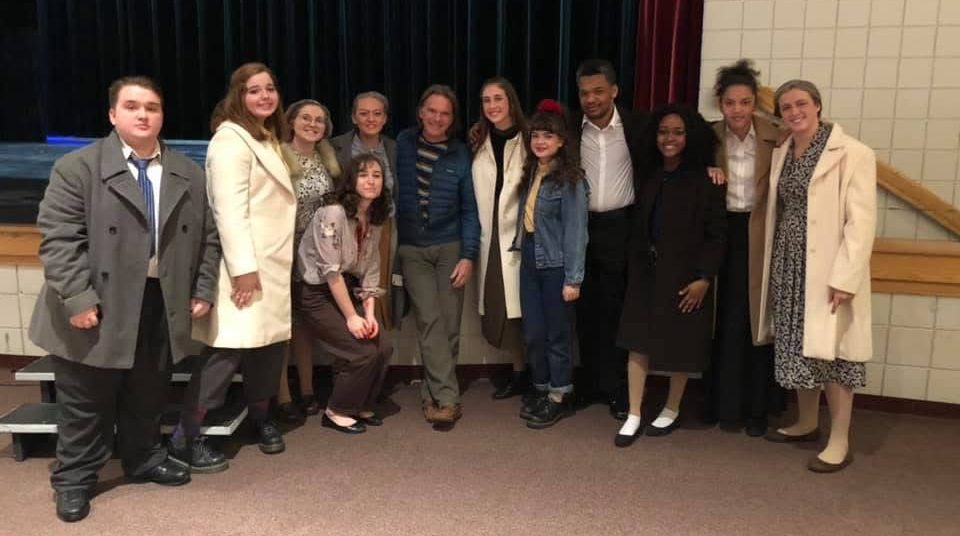
My students were extraordinary. The audience was in tears.
And we won Best Play.
But winning wasn’t what made that day unforgettable.
After the awards, we invited our unexpected guest to come down and meet the cast. He answered questions and told us about his family’s experience after the bombing while the entire audience stayed and listened.
He told my students that his sister’s personal belongings had been returned to his family—beautifully cleaned and packaged with love and care by the people of Lockerbie.
My students had just performed that story.
And now someone was standing in front of them telling them what it had meant to his family.
There were tears everywhere.
My husband Tom had watched the whole surreal afternoon unfold. It was my final year teaching; we had already decided to move to Georgia to be part of the daily life of our granddaughter, Emma.
Afterward, he turned to me.
“How can you leave this?”
“Emma is more important,” I replied.
One More Performance
We went on to the State Festival and gave another stellar performance.
One of the judges had directed The Women of Lockerbie before, and it was clear that her vision of the play was different from mine. She also seemed to favor newer, more cutting-edge works; to her, perhaps, Lockerbie felt a little overdone.
We were not selected as Best Play.
But Nigel—the inexperienced young actor I’d threatened to replace if he missed another rehearsal—was named Best Actor at the State Festival.
He’s still acting today.
But that isn’t the part I remember most.
After the State Festival was over, my students did one more thing.
They took one of those long pieces of off-white fabric we had created for our ending—one of six scrolls that together bore the names of the 270 people they had never known.
And they gave one to the man we’d met at Regionals.
The one with his sister’s name on it.



Beautiful story!
Have you ever heard about this woman’s story?
“Juliane Koepcke is the real-life “girl who fell from the sky” who survived a 10,000-foot fall into the Amazon rainforest after a plane crash in 1971.“